
Maya Ramsay is an award-winning artist, curator and writer working on the subjects of conflict, migration and the climate emergency. She works with politically and historically important sites, employing a variety of processes to capture visual histories that would otherwise be lost or unseen. These include drawing, film, photography, sculpture and a process developed in 1997 to lift surfaces from sites.
Projects include:
COUNTLESS (2016-2018)
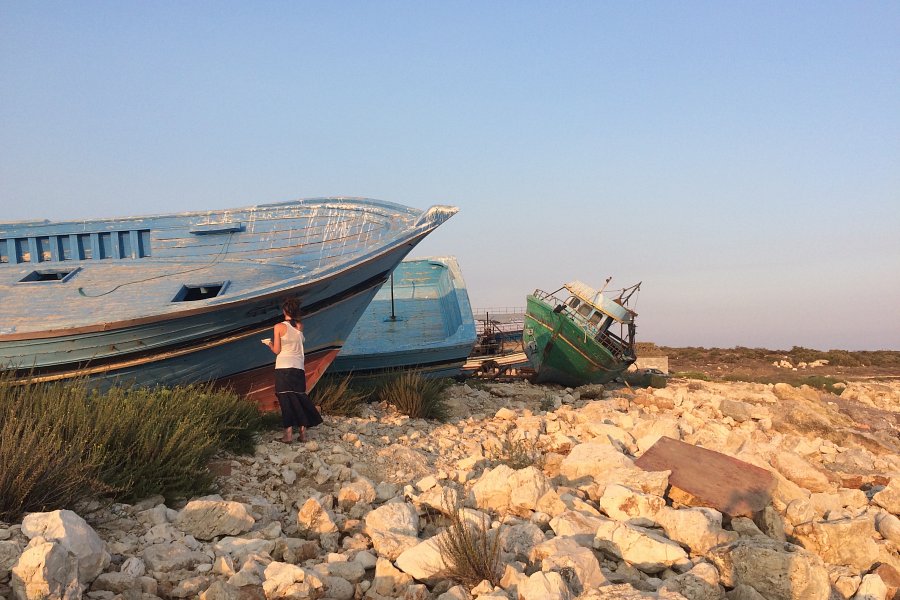
The Countless project includes a series of 30 graphite rubbings from the graves of 30 migrants who died at sea whilst trying to reach Europe. In 2017 it was 30 years since the first recorded migrant shipwreck occured in Europe. Migrant's graves are marked with numbers rather than names as the majority of their bodies remain unidentified.
http://www.mayaramsay.co.uk/work.php?s=countless-graves
Alongside the nameless grave rubbings are a series of rubbings from the names painted on the sides of shipwrecked migrant boats. The names refer to religious phrases such as 'In God We Trust'.
http://www.mayaramsay.co.uk/work.php?s=countless-boats
The Countless project also includes found objects, photographs and film footage of the graves and boats, including a short film made on one of the boats entitled Leave or Remain/ Taraka aw Baqqa. The film was a prizewinner at the 2019 Swedenborg Film Festival.
https://www.youtube.com/watch?v=InvlDysKSyM
The Countless project was first presented in a solo exhibition at Aspex gallery, Portsmouth from 04-06/2017 as the winner of the EMERGENCY Award 2016.
The Countless project was funded by the Arts Council England.
Works from the Countless project were exhibited as part of the Sink Without Trace exhibition on migrant deaths at sea curated by Maya Ramsay and Federica Mazzara, in 2019 at P21 Gallery, London.
Maya Ramsay published an article on the subject of art & migrant deaths at sea - Reframing the debate: The art of Lampedusa for 'Crossings: Journal of Migration and Culture' (2016). A version of the article can be read here:
http://www.mayaramsay.co.uk/blog/post.php?s=2018-06-23-reframing-the-debate-the-art-of-lampedusa
'The Role of Art in Subverting the 'Ungrievability' of Migrant Lives' by Federica Mazzara, featuring the Countless project, can be read here: https://parsejournal.com/article/the-role-of-art-in-subverting-the-ungrievability-of-migrant-lives
WALL OF SOUND (2015)
Wall of Sound is a series of graphite rubbings of woodchip wallpaper in Jimi Hendrix’s London home at 23 Brook Street, made prior to the building's renovation into the Hendrix House museum.
http://www.mayaramsay.co.uk/work.php?s=wall-of-sound
Hendrix’s home is next-door to where the composer Handel lived 200 years earlier and it is said that Hendrix saw visions of Handel on the walls of his flat. The wallpaper scores are composed of abstract marks created by graphite rubbings of the woodchip wallpaper on blank manuscript paper. Their similarity to music notation encourages viewers to imagine the sound that Hendrix’s walls might make.
Wall of Sound has been interpreted and performed by leading jazz musicians.
The five sections, akin to a suite of music, were performed as part of the 2015 London Jazz festival in Handel’s rehearsal room, as part of the 2016 London Jazz festival at the Southbank Centre and at the opening of Hendrix House in 2016.
Wall of Sound won EMERGENCY 2016.
http://www.artlyst.com/articles/maya-ramsay
The Wall of Sound project includes two additional rubbings entitled Murmuration (Little Wing) and Through the Haze.
Footage of a composition based on part of Wall of Sound, performed in Hendrix's bedroom, can be seen here:
STATION X (2012)
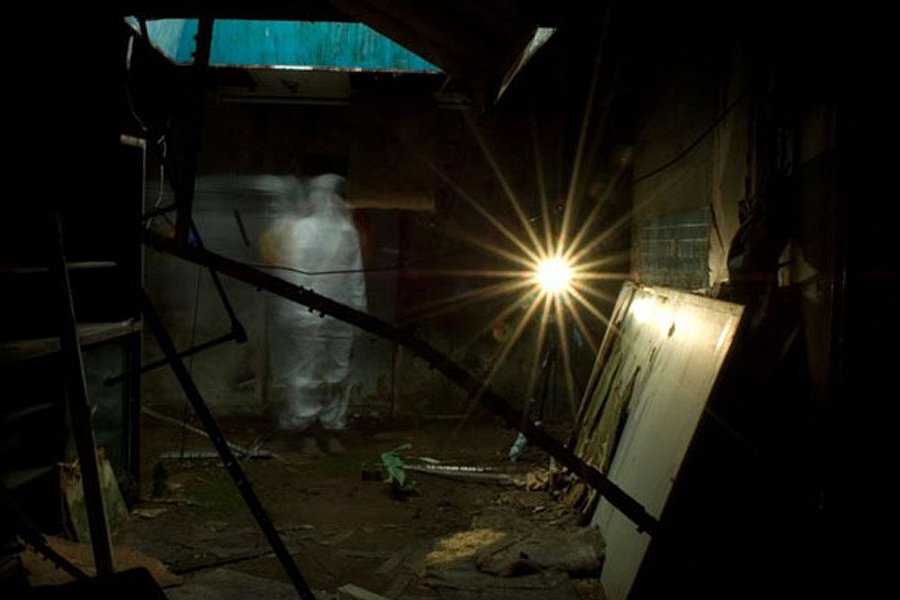
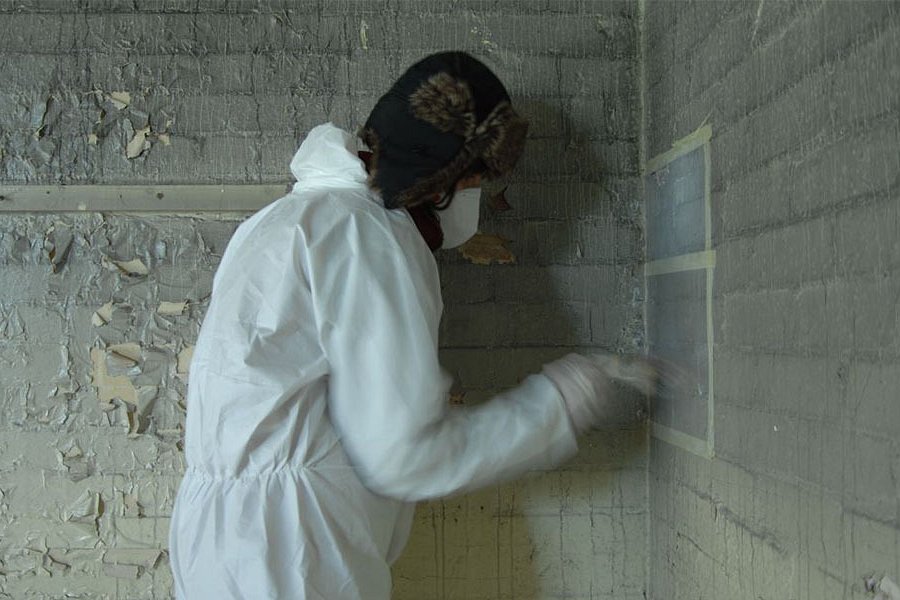
For the STATION X project, surfaces were lifted from the walls of derelict buildings where the Code-breakers worked to outwit the Nazis during World War 11 at Bletchley Park. The surfaces were lifted prior to the buildings renovation into a museum. These buildings had lain derelict for many decades awaiting repair and were hugely evocative of internationally important histories.
The works include surfaces lifted from one of the buildings where the walls were covered in a myriad of cobwebs that had become carbonised during a fire.
The STATION X project was the subject of a number of BBC interviews and a feature on Radio 4’s Today programme.
http://www.bbc.co.uk/news/uk-england-beds-bucks-herts-17730926
The STATION X project was first exhibited in MK Gallery project space and in Alan Turing's hut at Bletchley Park in 2012. One of Maya Ramsay's works from the project was displayed in the Bletchley Park Rescued and Restored exhibition at Bletchley Park from 2016-2018.
https://artsandculture.google.com/exhibit/the-restoration-of-bletchley-park/QQZuD4hx
The Station X project is featured in the book Saving Bletchley Park by Dr. Sue Black:
https://www.waterstones.com/book/saving-bletchley-park/sue-black/9781908717924
WALL TALK (2008 - ongoing)
Wall Talk is an ongoing project using a process to lift surfaces from sites that have a relationship to conflict.
The Wall Talk project was presented as a solo exhibition as the winner of the London Group Solo Show Award in 2013 and shortlisted for the Artraker Award for Art and Conflict in 2014.
http://www.artraker.org/maya-ramsay
Images:
(1) Working on the Countless project, 2017, Shorsh Saleh
(2) Working on the STATION X project, 2012, Luke Williams
(4) Working on the STATION X project, 2012, Rachael Marshall
Contact: maya_ramsay@yahoo.co.uk